 English
 Indian
 العربية
 Español
 Deutsch
 Türkçe
 Русский
 Français (Afrique)

The Odyssey passes $1.6 billion on its way to becoming Universal's highest-grossing movie ever
Christopher Nolan's Greek myth epic The Odyssey is on its way to becoming Universal's highest-grossing movie ever.
The film has crossed the $1.6 billion mark at the box office, which puts it within touching distance of Universal's current highest-grossing movie, Jurassic World. The dino flick stands at $1.67 billion at the box office, while The Odyssey is closing in with $1.63 billion.
It's no surprise that The Odyssey is doing so well, considering IMAX 70mm screenings were extended to accommodate the huge demand.
The film follows Matt Damon's Odysseus on his mammoth journey home from the Trojan War, which puts him up against a cyclops, a sea monster, a massive whirlpool, man-eating giants, and a witch who likes to turn men into pigs. Meanwhile, his wife Penelope (Anne Hathaway) must fend off the suitors who want to marry her, led by Robert Pattinson's Antinous – while Odysseus and Penelope's son Telemachus (Tom Holland) sets off to seek news of his father.

The Odyssey beat The Dark Knight Rises to have the biggest opening weekend of Nolan's career, and it also beat Deadpool and Wolverine to become the highest-grossing R-rated movie of all time.
"What you're looking for is to bring something new to show something to the audience that maybe they haven't had the chance to experience before," Nolan previously told GamesRadar+ of the movie. "The Odyssey, ironically for a 3000-year-old foundational text, is a story really at the bottom of so many other stories that have followed it since. It underpins so much of movies, but it has never been done in modern cinema."
The Odyssey is in theaters now. For more, check out our The Odyssey review, or our The Odyssey beginner's guide for a background on Homer's epic.
Studio Ghibli afviser AI-trenden som en uinteressant fupnummer
Mange blev forbløffede, da der for et år eller to siden begyndte at dukke alle mulige AI-genererede fortolkninger af popkulturelle fænomener op, som angiveligt viste, hvordan de ville se ud, hvis Studio Ghibli havde lavet dem. Et eksempel på dette er Ringenes Herre, som du kan tjekke i X-indlægget nedenfor.
Mens andre skabere har været forargede over sådanne ting og truet med retssag, valgte Studio Ghibli at forblive tavse. Og lige så hurtigt som trenden opstod, forsvandt den også. Nu kommenterer Studio Ghiblis formand og producer, Toshio Suzuki, beslutningen om at håndtere plagiatet i et interview med Asahi Shimbun (via Automaton), hvor han siger, at det var så åbenlyst falsk, at konceptet ikke er interessant:
"... selvom AI let kan producere en bestemt type animation, kan enhver med bare lidt viden se lige igennem det. Det betyder ikke så meget, og det er heller ikke interessant."
Studiets medstifter og mest berømte figur, Hayao Miyazaki, siges i samme interview ikke engang at vide, hvad generativ AI er. Den 85-årige legende har været ude af offentlighedens søgelys siden 2023-hittet The Boy and the Heron og arbejder angiveligt privat på endnu et formodet mesterværk. Ifølge Suzuki vil AI ikke kunne genskabe den fine kunstneriske evne, som Miyazaki er kendt for, og han siger lakonisk:
"Ghibli vil udvikle sig til en kulturel enhed, der demonstrerer, hvad det betyder for mennesker at skabe kunst."
Alienware's 2026 16X Aurora does much more than slap a fancy new OLED face on its 16-inch chassis, there's a route here for those stung by RAM prices
Last year's Alienware 16X Aurora actually represented solid value at the time, but its lack of OLED display and RTX 5070 configuration cap kept it from being one of the greats. Dell's fixed both of those problems in its 2026 re-release, and then some.
This is the brand's middle child. It's got more grunt than Dell's new Alienware 15 hybrid systems and has more meat than the entry-level Alienware 16 Aurora (a cheaper rig that didn't see this year's OLED upgrade). It's not a flagship, though, so while the Alienware 16 and 18 Area-51 models can take you further up the GPU pole, we're still firmly in mid-range territory.
It's a 16-inch gaming laptop for those who want to splash out on an upgrade from an RTX 40-Series or RTX 30-Series card, but don't need the full 4K force of an RTX 5090 or the no-holds-barred 1600p performance of the RTX 5080. It's a relatively slimline machine (not a true work / play hybrid, but still more manageable than the Area-51 line) with the rounded edges and soft-touch internals you'll find in similar aesthetically conscious rigs.
Does the new Plus range of Intel processors have any meaningful impact on day-to-day gaming performance? No. But that new OLED display certainly does. It's one of two headline new features here. Alienware's Anti-Glare OLED screen sidesteps the glossy implementations across the rest of the best gaming laptops, instead opting for a matte finish that changes the game. Accompanied by upgradeable RAM and SSD bays, this is a real investment for those happy to wait for memory and storage upgrades while prices are sky-high.
Meanwhile, stretching the GPU menu into RTX 5070 Ti territory means the 16X Aurora can also push 12GB VRAM at the top end of its spec sheet. That's going to allow for a little more headroom in higher-resolution gameplay, and, going by my benchmarks, should get you comfortably playing in 1600p across more demanding titles.
Alienware 16X Aurora configurations
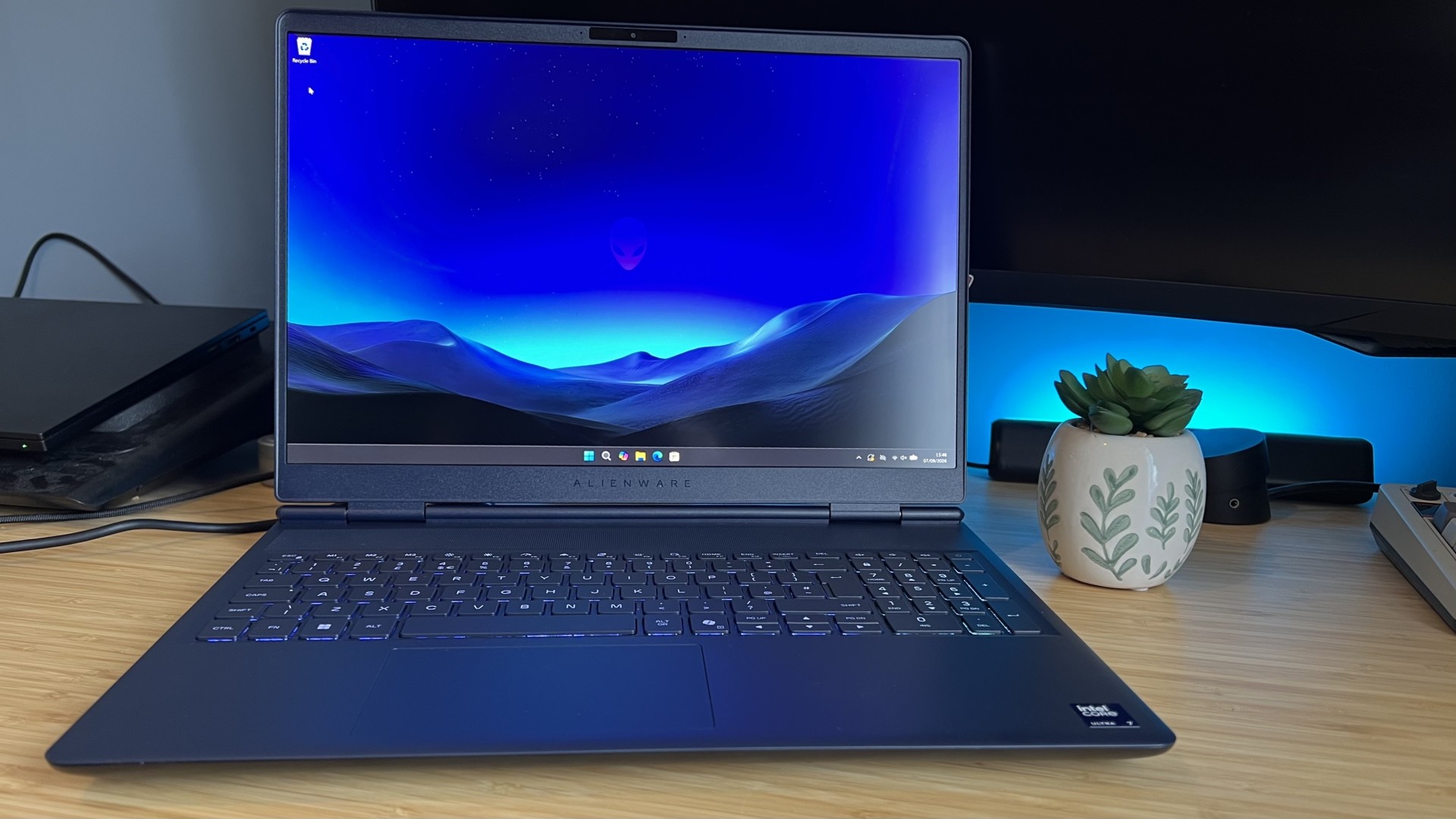
As a mid-range device, the Alienware 16X Aurora keeps its sights firmly in the middle of the GPU scale, stretching a little towards the higher end of available CPU options. Lighter builds are covered with 16GB RAM / 512GB SSD configurations (though that SSD looks to be exclusive to the US at the time of writing), but if you're going all out the 16X Aurora also accommodates 64GB / 4TB RAID storage pairings as well.
Tested | Also Available | |
|---|---|---|
Price | $2,679.99 / £2,499 | $1,529.99 - $5,279.99 / £2,349 - £6,549 |
Display | 16-inch WQXGA Anti-Glare OLED, 240Hz | - |
Processor | Intel Core Ultra 7 270HX Plus | Intel Core Ultra 9 290HX Plus |
GPU | RTX 5070 | RTX 5060 | RTX 5070 Ti |
RAM | 16GB DDR5 | 32GB | 64GB |
Storage | 1TB NVMe M.2 Gen4 SSD | 512GB NVMe M.2 Gen4 | 2TB NVMe M.2 Gen5 | 4TB RAID 0 NVMe M.2 Gen5 |
Connectivity | WiFi 7, Bluetooth 5.4 | - |
Ports | 2x USB 3.2 Gen 1, 1x USB 3.2 Gen 2 Type-C, 1x Thunderbolt 4, 1x HDMI 2.1, 1x 3.5mm audio, 1x RJ45 | - |
Dimensions | 0.92 x 10.45 x 14.05 inches | - |
Weight | 2.61kg | 2.57kg |
It's a healthy mid-range tasting menu overall, allowing for prices to start at $1,529.99 in the US while still keeping that OLED display. The numbers run a little more northerly in the UK, however.
The configuration I tested paired up an Intel Core Ultra 7 270HX Plus processor with an RTX 5070 GPU (it should be noted that this is the older 8GB version rather than the new 12GB release). That's with 16GB RAM and a 1TB Gen4 SSD (you'll need to be at 2TB or more to get zippier Gen5 tech).
The final bill on this configuration comes to $2,679.99 / £2,499.99, which is a little squeaky to say the least. Gaming laptop prices have ballooned in the last year, and 2026's releases require a different hat to evaluate their value compared to the generation before.
Back in July I scoped out average RTX 5070 gaming laptop prices when the new 12GB card hit the shelves, with the then-average MSRP of these mid-range machines (at Best Buy) sitting at around $2,500 (not including savings). Alienware's just on the wrong side of that fence here, then, but those figures add important context for what I'm about to say next.
An RTX 5070 configuration of last year's Alienware 16X Aurora came in at under $1,600. The RTX 5060 version I tested (with 32GB RAM) totalled $1,449.99. We've got a big price gap between the two generations, but not one that's isolated to Dell.
Looking at the rest of the market, Alienware is just teetering into the more expensive category - by around $200. That's nothing particularly new, Dell's best Alienware laptops have always been pitched at a premium.
Alienware 16X Aurora performance
The Alienware 16X Aurora performs in line with the rest of my RTX 5070 testing pool, frequently coming out ahead of slimmer machines like the Razer Blade 14 and Acer Predator Triton 14 AI while matching (if slightly trailing) the similarly built Asus ROG Strix G16.
Across 3DMark tests, it keeps on par with other RTX 5070 decks in Steel Nomad, the more true-to-life run, while topping the pack in Fire Strike and coming in behind the Strix G16 in Time Spy. Of course, it's 2026, and with RAM shortages blazing onwards, it should be noted that the G16 I tested last year had 32GB RAM under the hood, while this Aurora only has 16GB.
In all likelihood, you're going to be sacrificing a little memory to pick up a gaming laptop in 2026, but that's not going to cause too much harm at the power level of the RTX 5070. While the Aurora is slightly behind the G16 in both lighter and more demanding 1080p runs, we're still comfortably over 60fps even in Cyberpunk 2077 at full RT: Ultra. The Aurora is still holding its own though, performing just about as well as the 32GB G16 with half the memory. If you're worried about your overall performance when taking a RAM cut, the Aurora's gameplay figures should put your mind at ease a little. Obviously, that's future-proofing notwithstanding.
At the top end of the resolution scale, the G16 does sometimes take us closer to a more comfortable 60fps+ position in titles like Total War: Three Kingdoms. It's these kinds of strategy games where memory could play a larger role in overall performance, and the Asus's 68fps in Ultra graphical settings are far less squeaky than the Aurora's 62fps average. Still, we're firmly in smooth-running territory here still.
Most RTX 5070 rigs will fall below that 60fps threshold in heavy duty titles like Cyberpunk 2077, so it's no surprise that the Aurora follows suit. We can still hit those goals in high settings slightly further down the performance scale, on Horizon Zero Dawn: Remastered, even if the Alienware averages slightly under the G16 at full Ultra settings.
Overall, though, the Alienware 16X Aurora manages to perform inline with the rest of the RTX 5070 testing pool, even with half the working RAM.
Alienware Aurora 16X OLED benefits
A matte OLED revelation
I was a little surprised when I first opened the lid. The new anti-glare OLED display Alienware has slapped on its Aurora's face takes a little getting used to, especially if you're coming from a more traditional glossy model. It's a strange sight to behold, with an affect I originally mistook for being dulled compared to the panel on my Razer Blade 14. But it's not dulled, there's simply no reflections giving it the annoyingly shiny topper you'll find elsewhere on the market.
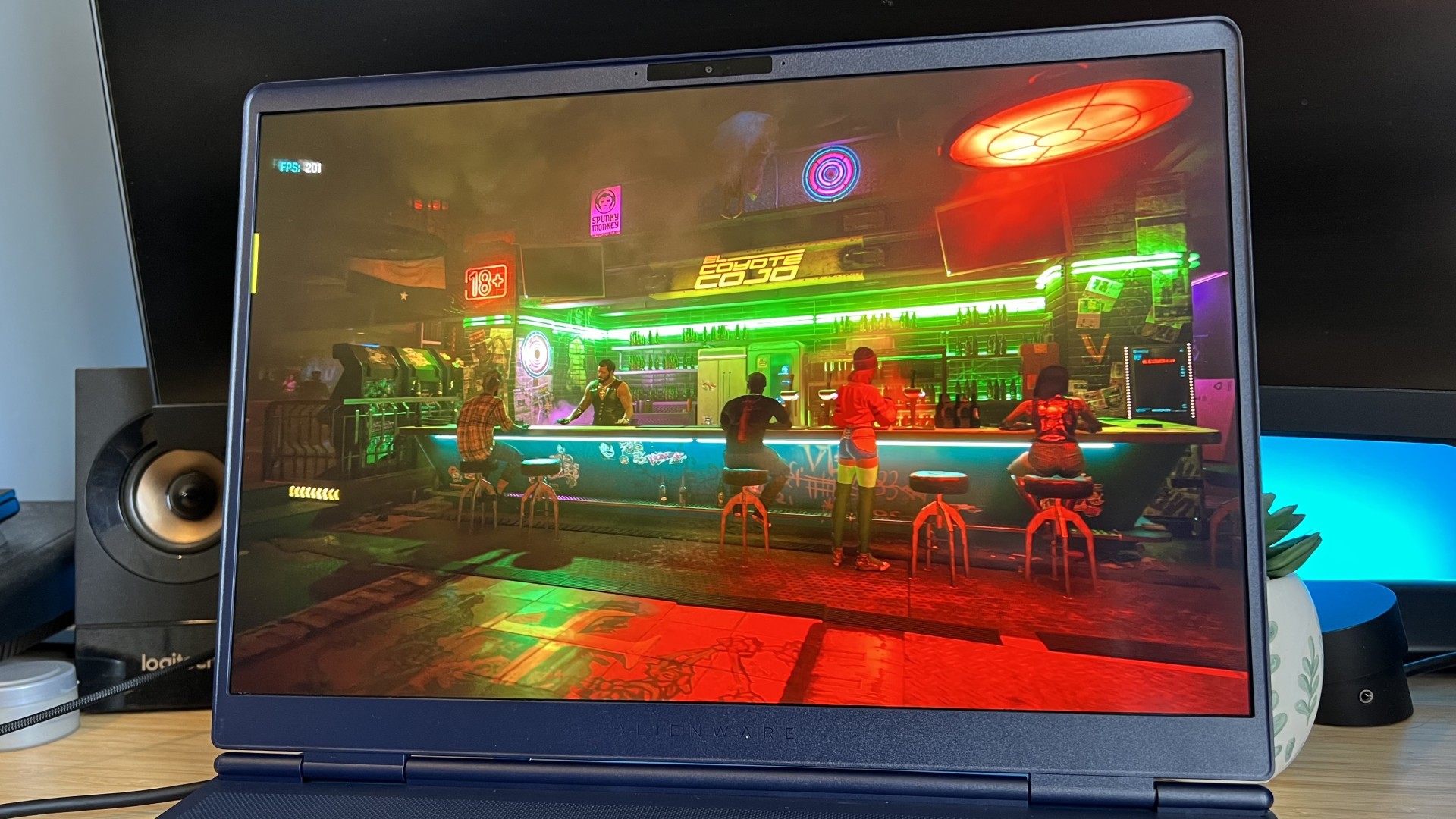
That means it's still packing a serious visual punch while also keeping darker details highly visible even in daylit environments. At full brightness, there's no loss of color impact or sharpness with that additional overlay. Cyberpunk's internal sets are gritty and moody, with neon pops of color exploding out of the screen. Take gameplay outside and the streets are filled with vibrant hues, each one represented with pinpoint clarity and a surprising amount of depth.
I can't remember a time I've ever specifically praised an Alienware laptop for its display, but 2026's iteration has knocked it out the park.
Sturdy battery life
16-inch gaming laptops, especially those in this slightly chunkier form factor, aren't typically designed as battery-first devices. The Alienware 16X Aurora isn't either, but it still manages to hold its own in productivity scenarios. I was able to complete a full eight hour work day on a single charge multiple times through my testing (that's nearly double what I got out of the Asus ROG Zephyrus G14). Granted, gaming only yielded me about three and a half hours, but that's on par with some of the slimmer machines more geared towards endurance than performance.
In it for the long haul
Ok so, you're not likely going to want to shell out for a 32GB or, God forbit, a 64GB configuration of the Alienware 16X Aurora in 2026 - not unless you're far wealthier than most players. However, while the 16GB model is going to be the only one suiting the budgets of mainstream portable PC purveyors, Dell's got a fix waiting in the wings.
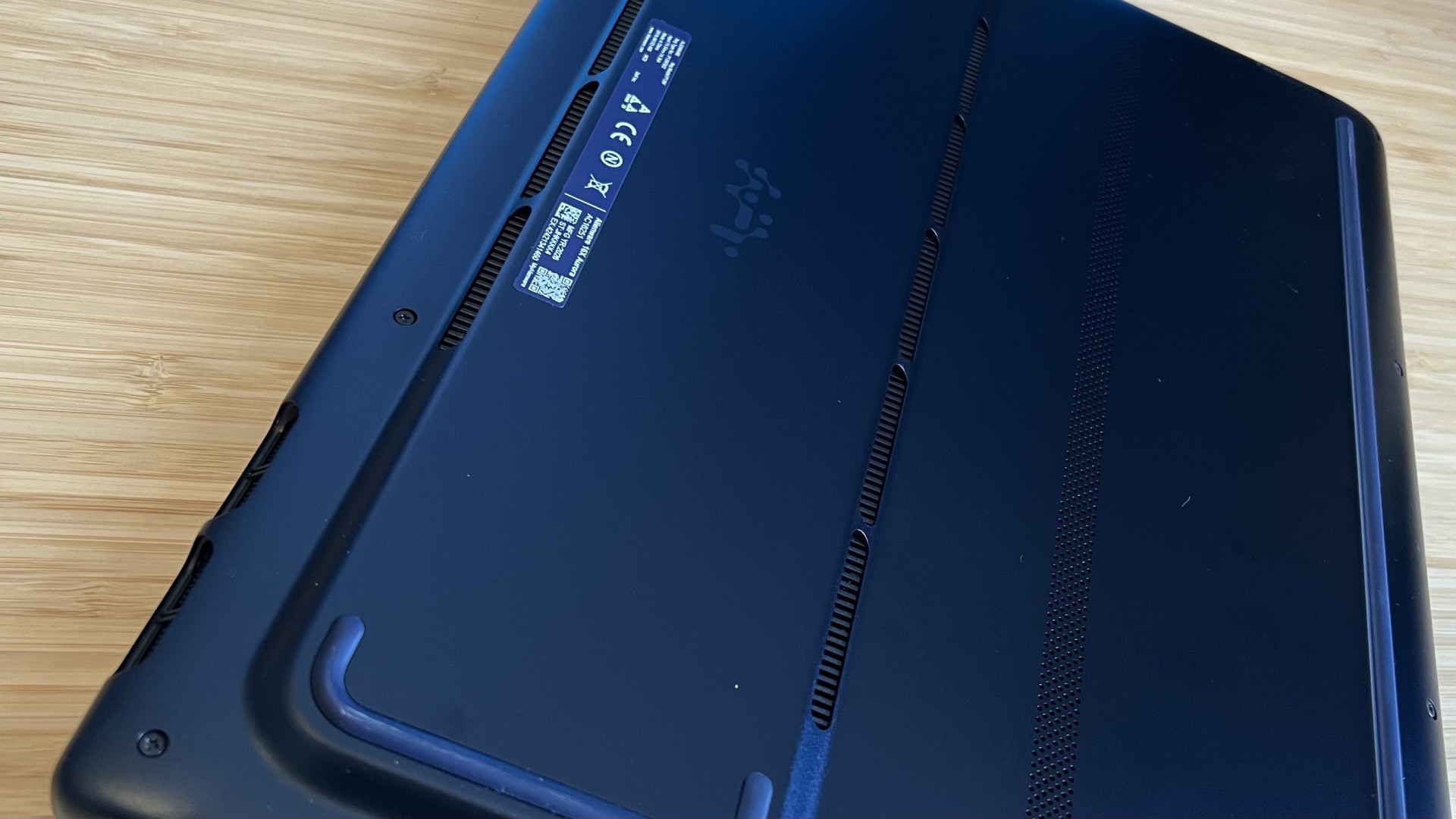
The Aurora is particularly easy to upgrade further down the line. The bottom cover is held in place pretty simply, with Philips-head screws, and once you're in you'll find two DDR5 slots to play with (should those prices become more manageable in the next few years), as well as two M.2 bays supporting 2230 and 2280 drives. The Aurora supports up to 64GB RAM across two slots.
Alienware Aurora 16X OLED drawbacks
A slight letdown in the keyboard department
A few years back Alienware released its M16 R2, and it featured one of the best-feeling keyboards I've used, even to this day. Since then, Alienware has stuck to a soft-touch, but highly satisfying internal control feel, from the gentle Aurora before this one to the snappy mechanical deck on the Alienware 16 Area-51.
Something feels a little less polished here, though. The keyboard is fine, it's got a confident level of travel with an easy tension under each key that makes for fast repeated presses. There's no sense of mushiness or softness here. It just doesn't have that tactile sparkle I've felt from the brand before.
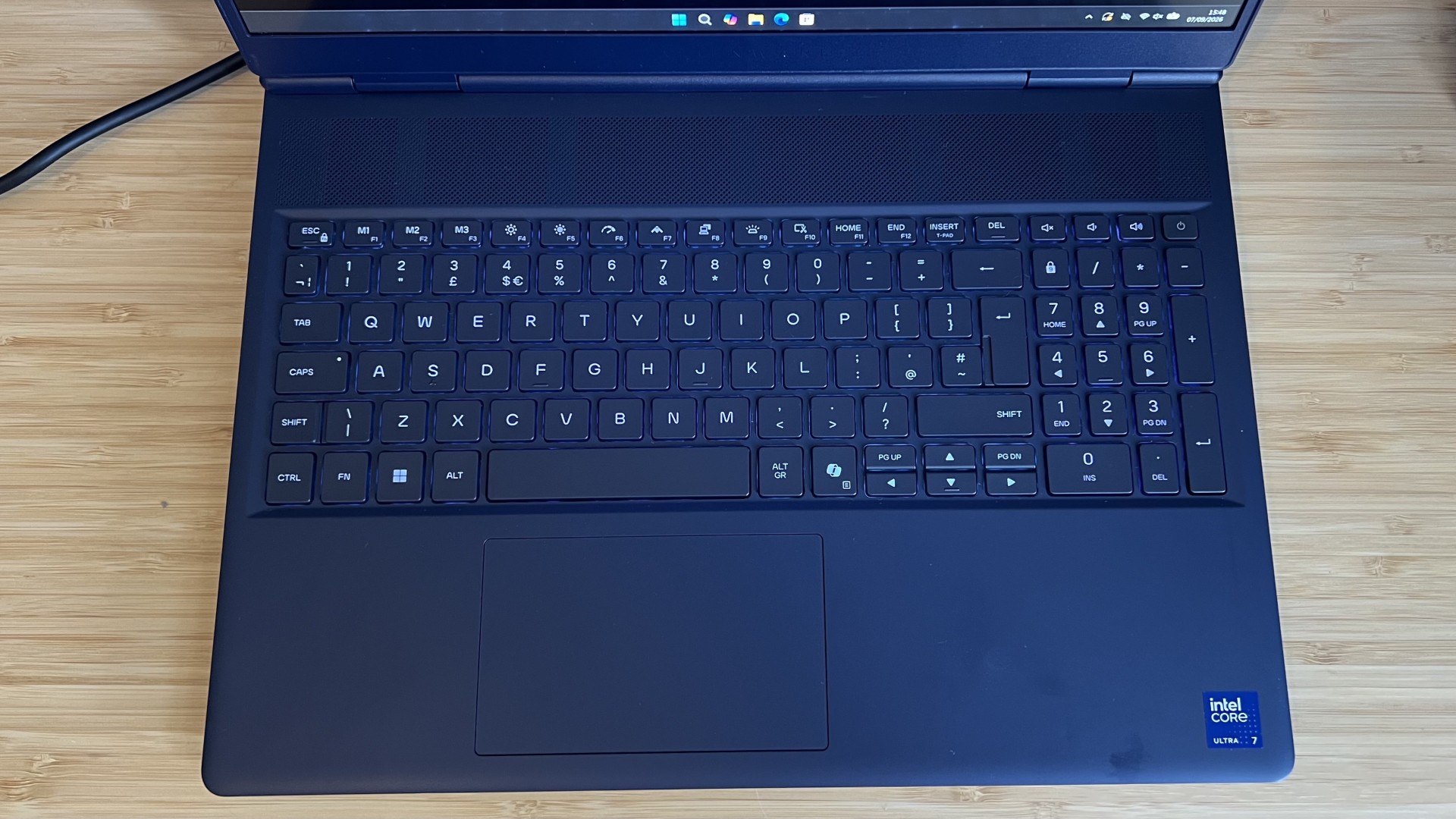
These keys are a little too loose to give me that same sense of satisfaction and the trackpad has just a little too much depth to match previous releases' super slick push gestures.
On the heavier side
It feels like Alienware laptops are always going to be a little heftier than their counterparts from other brands. While we're not exactly in the dark days of the 2010s here, the Alienware 16X Aurora is going to put more of a strain on your shoulders than others in its class. This machine ranges from 2.57kg to 2.61kg - a heft that's only beaten by the 2.8kg Asus ROG Zephyrus Duo in my 16-inch testing pool (and that's carrying a whole second screen around).
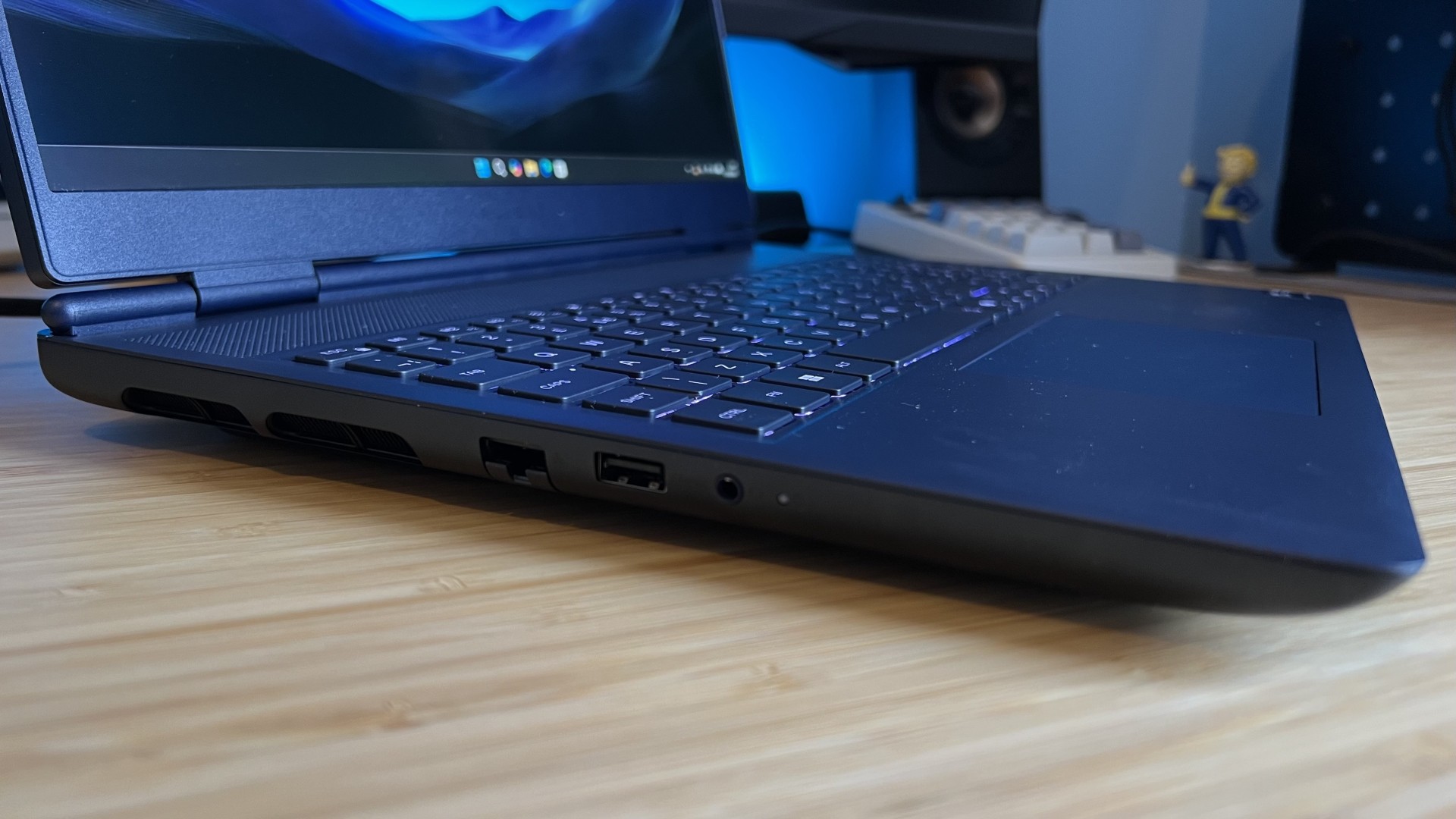
It's heavier than the MSI Cyborg (2.1kg), Acer Nitro V16 AI (2.43kg), Lenovo Legion 7 Gen 10 (1.99kg) and Acer Predator Helios Neo 16S AI (2.3kg). In fact, of all the 16-inch gaming laptops I've tested over the last two years, this is easily one of the heaviest.
That's not going to make too much of a difference if you generally keep your laptop at home, or only travel shorter distances. However, if you're after a 2-in-1 work and play machine, that strain is going to make itself known.
Should you buy the Alienware 16X Aurora?
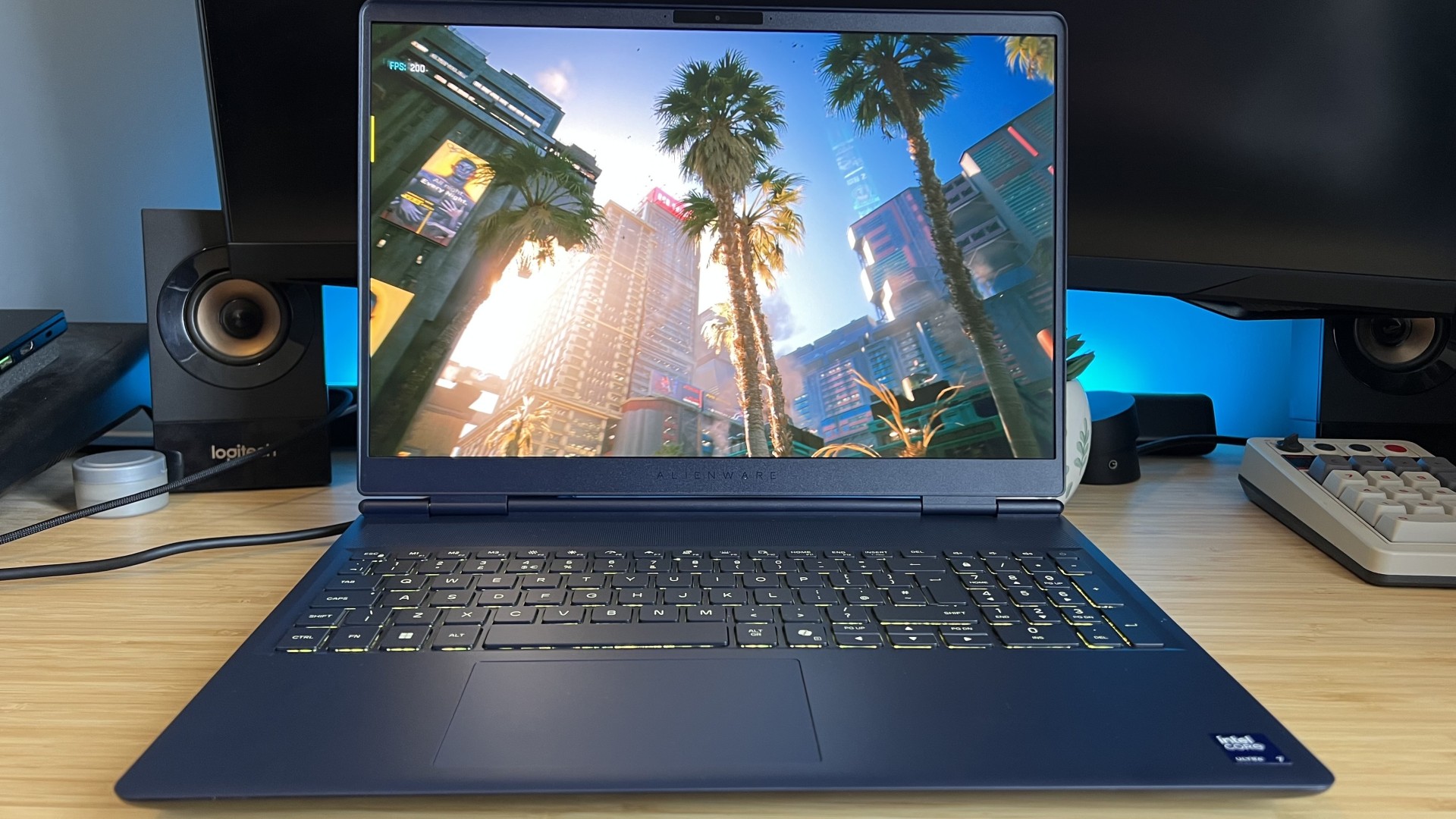
Gaming laptop prices are in a tricky spot right now, and Alienware's propensity for leaning slightly over average when it comes to the final bill isn't going to help it too much. The 16X Aurora trends towards the top end of the price range without any discounts applied, but it does have plenty to keep big spenders interested once those numbers have been digested. Its OLED display is going to serve anyone tired of battling glare during brighter hours, its performance still has it standing tall among its peers, and its upgradeability is going to go a long way to keeping that 16GB configuration interesting while prices are as mad as they are right now.
After spending three weeks with the Aurora, I'd happily recommend it to anyone looking to invest in an RTX 5070 or RTX 5070 Ti machine in 2026, though likely only if travel isn't going to be too intense.
How I tested the Alienware 16X Aurora
I used the Alienware 16X Aurora as my dedicated gaming and work laptop for two weeks, while also testing alongside a mini PC for an additional week. I ran the machine through in-game benchmarks on Shadow of the Tomb Raider, Total War: Three Kingdoms, Horizon Zero Dawn: Remastered, and Cyberpunk 2077 at 1080p, 1600p, and UHD+ in each game's high and highest settings. Each test was completed three times, with the final result above representing an average of each run.
I also used 3DMark's Time Spy, Steel Nomad, and Fire Strike benchmarks for more synthetic performance data, again running each test three times. Day to day, the Aurora's been running Restory, High on Life 2, and Doom: The Dark Ages.
For more information on how we test gaming laptops, check out the full GamesRadar+ Hardware Policy.
I'm also on the hunt for the best Razer laptops and the best Asus gaming laptops, or check out the best gaming handhelds for something even more portable.
Schau dir das Merch an, das Sega zur Tokyo Game Show bringt
Wenn du Sonic the Hedgehog und/oder Videospiel-Merchandise magst (was etwa 99 % von euch hier lesen sollte), dann wird die Tokyo Game Show ein Paradies sein. Sega (über Sonic City) hat nun das Merchandise enthüllt, das sie für Besucher mitbringen werden, und es sind wirklich coole Sachen.
Wir sprechen hier von zwei stilvollen T-Shirts sowie einem Sonic Mania-Schlüsselanhänger, der bereits viele Spekulationen darüber ausgelöst hat, warum sie es bringen, da das Spiel 2017 veröffentlicht wurde. Außerdem haben sie einige UFO Catcher-Gegenstände für Sammler.
Schaut euch unten die Extras an. Warst du schon mal auf der Tokyo Game Show oder planst du, irgendwann hinzugehen?