 English
 Indian
 العربية
 Español
 Deutsch
 Türkçe
 Русский
 Français (Afrique)

Pakistan demolish India to storm into volleyball semis
Pakistan swept arch-rivals India 3-0 on Thursday to reach the semi-finals of the Asian Games men’s volleyball competition and end their opponents’ unbeaten run.
Pakistan won 25-19, 25-23, 25-18 at Okazaki Chuo Sogo Park Gymnasium to beat India at the Asian Games for the second successive edition.
Murad Khan led the way with a match-high 22 points, while Usman Faryad Ali added nine and Mohammad Hamad eight.
Pakistan, ranked 39th in the world compared with India’s 49th, had beaten Kazakhstan and Uzbekistan in the pool stage before losing to hosts Japan to finish runners-up in Pool A.
India entered the quarter-final unbeaten after straight-set wins over Vietnam and Hong Kong and a five-set victory over Qatar.
Pakistan set the pace from the outset, taking the opening set 25-19 in 23 minutes as India struggled to contain their attack.
The second set proved more closely fought. India opened a 16-13 lead before Pakistan fought back to level at 16-16.
India again moved three points clear at 19-16, but Pakistan responded with another three-point run to draw level before taking control.
Pakistan reached set point at 24-22. India saved one, but Pakistan converted the next opportunity to take the set 25-23 after 34 minutes.
Pakistan then dominated the third set, opening a 14-9 lead before extending it to 17-10.
India saved two match points at 24-16, but Pakistan closed out the match on their third opportunity, winning the set 25-18 in 25 minutes.
The victory keeps Pakistan’s medal hopes alive as they advance to the semi-finals.
Asian Games: India win women’s team squash bronze after Anahat Singh’s heartbreak
 India's women's squash team claimed a bronze medal after facing a 1-2 defeat from Hong Kong in the semifinals. Anahat Singh's match was intense, yet she fell short despite holding match points. Tanvi Khanna fought back to equalise, but ultimately, Joshna Chinappa couldn't secure victory against Ho Tze Lok in the decisive match. This result contributes to India's notable achievement of four squash medals at the Aichi-Nagoya Games.
The Final Sprint: The Challenge of Covering a Multi-Sport Games

As the Asian Games enters its final days in Nagoya, with most competitions reaching the semi-finals and finals, the next few days become intensely challenging for the media contingent.
Take Wednesday, when there were finals in archery, semi-finals in boxing and the women’s hockey semi-final, all important disciplines for India. For Indian journalists, the challenge then becomes deciding which competition to cover, often at the expense of another. chincha.pl

The day before, on the final day of athletics, I overheard a fellow journalist ask another which sport she was going to cover the following day. “I’m so confused,” she replied. “I don’t know where to go and which one to miss.”
One person can only be in one place at a time, and the distances here are huge, making it difficult to cover two venues on the same day. On Wednesday, for instance, our five-member RevSportz team in Nagoya split up between archery, shooting, boxing and hockey. Today, the focus will be on cricket, archery and the India-Pakistan hockey match. The team members who covered boxing yesterday had a total travel time of around four hours, both ways, from the hotel to the venue. Archery was three hours one way from the hotel.
As a result, at the end of every day, the RevSportz team in Nagoya has had to brainstorm over which sports to cover the following day. Sometimes those decisions pay off and we get to witness a medal-winning performance. At other times, they end in disappointment.
Through our emphasis on holistic coverage of multi-sport events since our inception, we have developed a strong sense of how to monitor and handle multiple venues. Yet, we still sometimes falter. Such is the nature of a multi-discipline Games.
At a multi-sport event such as the ongoing Asian Games, a one-track mind simply will not deliver the goods. One might specialise in badminton, hockey or boxing throughout the year, but at a multi-sport Games, it would not be an overstatement to say that a journalist needs to be an octopus.
Without those tentacles, the larger story can easily pass you by. When multiple medals are being won at the same time, or a medal and a controversy break simultaneously, the journalist who can turn into an octopus will make the most of the assignment.
To top it all, covering a multi-discipline event in a country where language can be a barrier is not easy. Travel times increase because of miscommunication, lack of comprehension and logistical errors while trying to reach a particular venue.
As we gear up for three or four packed days before the Games draw to a close, and the Indian campaign finally heats up, the days ahead will not only be long and demanding but will also require calculated risks and smart decisions.
Also Read: Asian Games 2026, Hockey: India beat South Korea; set final date with China
The post The Final Sprint: The Challenge of Covering a Multi-Sport Games appeared first on Sports News Portal | Revsportz.
When the rain plays spoilsport, who pays the price?

The Asian Games are well and truly up and running, with all eyes on some of the biggest contingents and sporting nations as they chase medals across disciplines. Among the sports drawing attention is cricket — a sport that continues to grow far and wide, and one that offers something particularly significant at a continental event like this: an opportunity for associate nations to compete with the bigger cricketing powers.
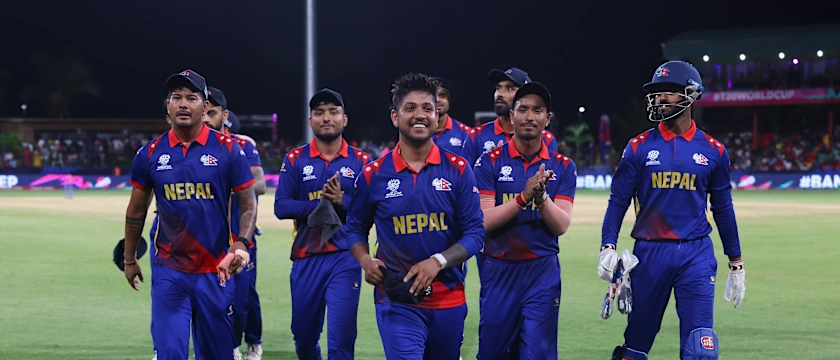
For these teams, it is not always about defeating a Test-playing nation. Sometimes, simply getting the opportunity to play against one is an achievement in itself. Behind that moment are years of hard work, qualification, preparation and dedication, all driven by the hope of representing their country on one of the biggest sporting stages in Asia.
Which is what makes the rain-related outcomes at the Asian Games particularly difficult to digest.
India’s T20 quarterfinal match against Afghanistan was completely washed out, sending India through to the semi-finals. Sri Lanka vs Nepal and Bangladesh vs Malaysia met the same fate, with the higher-ranked teams progressing. For the associate nations, there was no opportunity to take the field, compete or even test themselves against a stronger opponent.
Malaysia cricketer Virandeep Singh expressed that dejection and disappointment in a post on X: “Sad we couldn’t even make it to the ground. Waited 3 years for another opportunity to play against a Test nation but not meant to be I guess. Associate cricket is tough lol.”
It is difficult for anyone not to empathise. Cricket at the Asian Games is governed by the Asian Cricket Council and the Olympic Council of Asia, rather than the ICC. So, there is another factor to consider – the cricket body does not get to decide which season a multi-sport event is played in. The Asian Games are scheduled according to the larger sporting calendar, and unlike most other outdoor sports, cricket can be heavily affected by the season and weather conditions. While seasons may have little impact on several other disciplines, rain can bring cricket to a complete standstill.
But the larger question remains — when an associate nation waits years for an opportunity like this, is there a way to ensure that rain does not completely take that opportunity away?
The problem, however, is that cricket is uniquely vulnerable to rain. Unlike several other outdoor sports, the playing surface and ball conditions are integral to the game. Even indoor cricket has never proved to be a practical long-term solution for the traditional format.
There was an experiment in 2000, when Australia and South Africa played an ODI series at Melbourne’s Colonial Stadium under a covered dome. Initially, balls hitting the roof were declared dead and re-bowled. Later, a roof-hit was awarded six runs when the Big Bash League started — a rule that created its own absurdities before eventually being scrapped. As modern bats became more powerful, the idea became even less feasible. Cricket also relies heavily on natural conditions such as sunlight, wind, humidity and dew.

So, perhaps, there is no perfect answer.
But there is certainly room for the conversation to continue — especially with cricket’s growing presence on the Olympic stage and Los Angeles 2028 on the horizon. The weather may be beyond anyone’s control, but perhaps the rules surrounding its consequences could evolve.
Because for the big teams, a washed-out game can be an unfortunate interruption. For an associate nation, it can mean waiting years for a dream that lasted only as long as the rain stayed away.
Follow RevSportz for latest sports news
The post When the rain plays spoilsport, who pays the price? appeared first on Sports News Portal | Revsportz.