Of utmost importance, make sure to review your fantasy baseball league format, scoring and roster settings to identify a draft plan. With different league sizes, scoring and formats, the draft market changes. The early themes of the fantasy baseball draft season involve injuries, starting pitchers going earlier and prospect hype. Meanwhile, we have league-wide data and trends to monitor, including Statcast data for all Spring Training parks and stolen bases skyrocketing in recent seasons.
[Join or create a Yahoo Fantasy Baseball league for the 2026 MLB season]
Injuries, prospect news and more data will cause players to rise and fall in drafts, sometimes making them targets and fades. More advanced data in Spring Training may cause drafters to examine and decide how much to weigh the small sample. I tend to lean toward not having Spring Training data sway our draft decisions too heavily, especially after the lengthy offseason research. Use projections and review the market to identify potential inefficiencies, to identify breakouts and sleepers, to help win leagues.
Statcast Data in Spring Training
We’ve been spoiled in fantasy baseball, where we can find free advanced metrics on many websites like FanGraphs, Baseball Savant and more. However, that hasn’t been the case in Spring Training, with only some parks having Statcast data. Mike Petriello of MLB.com announced that Statcast data will be available in 2026 Spring Training games. That’s a game changer, but how and/or why?
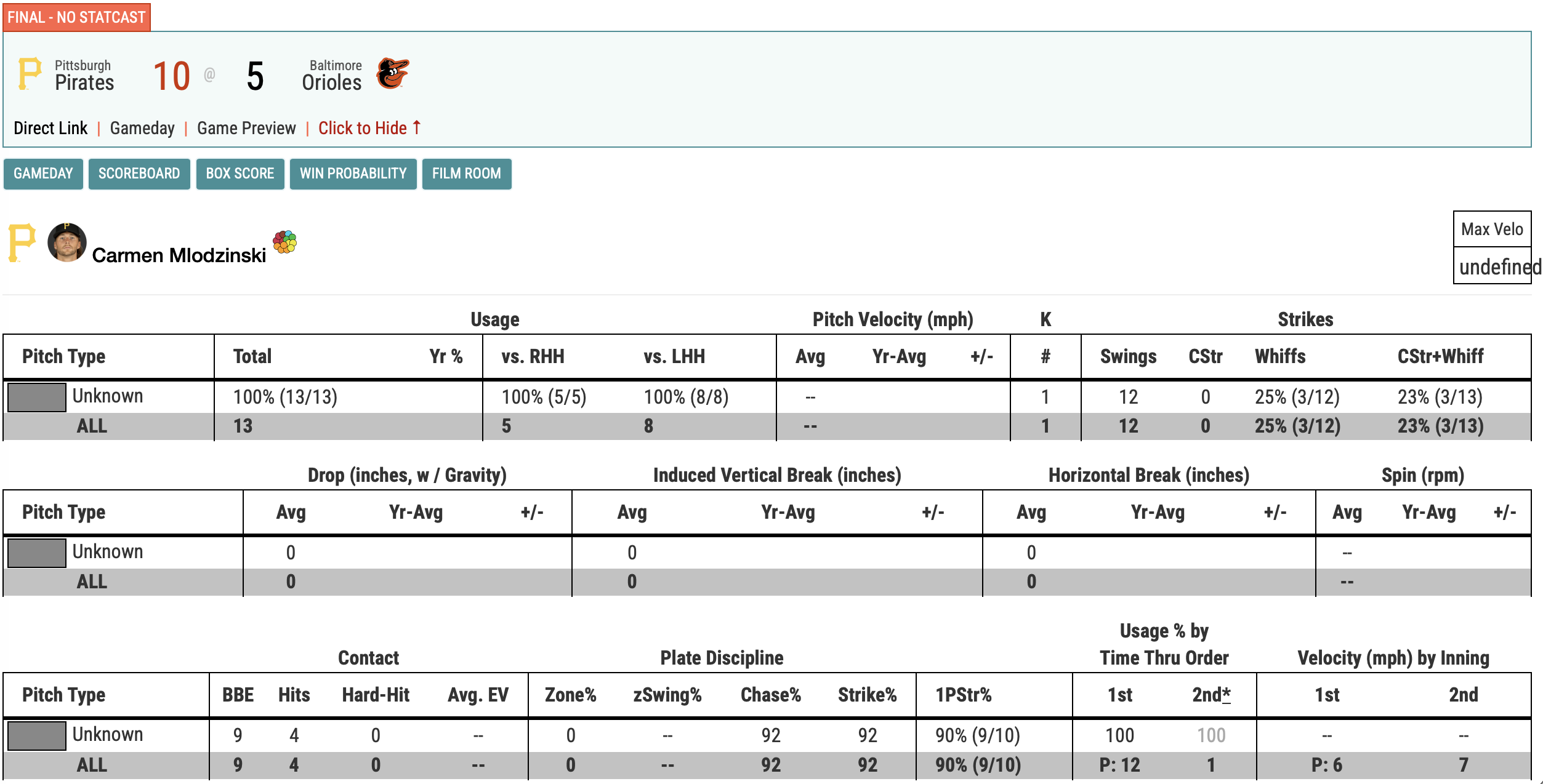
The visual below shows the Statcast Game Feed Player Breakdown Feature with no Statcast from last Spring Training.
Again, we’re spoiled. We’re used to using the Statcast Game Feed feature to find a pitcher’s arsenal, their movement profiles, exit velocity data and more. That will change how we evaluate Spring Training since we’ll be able to see whether certain pitchers had an increase in velocity or debuted a new pitch. Or we could find out if the offseason training for a hitter paid off with increased exit velocities and bat speed. We won’t have incomplete Statcast data from Spring Training, and theoretically, a larger sample of pitches, batted ball events and swings.
Here’s a look at the Statcast Game Feed from Spring Training with Statcast data:
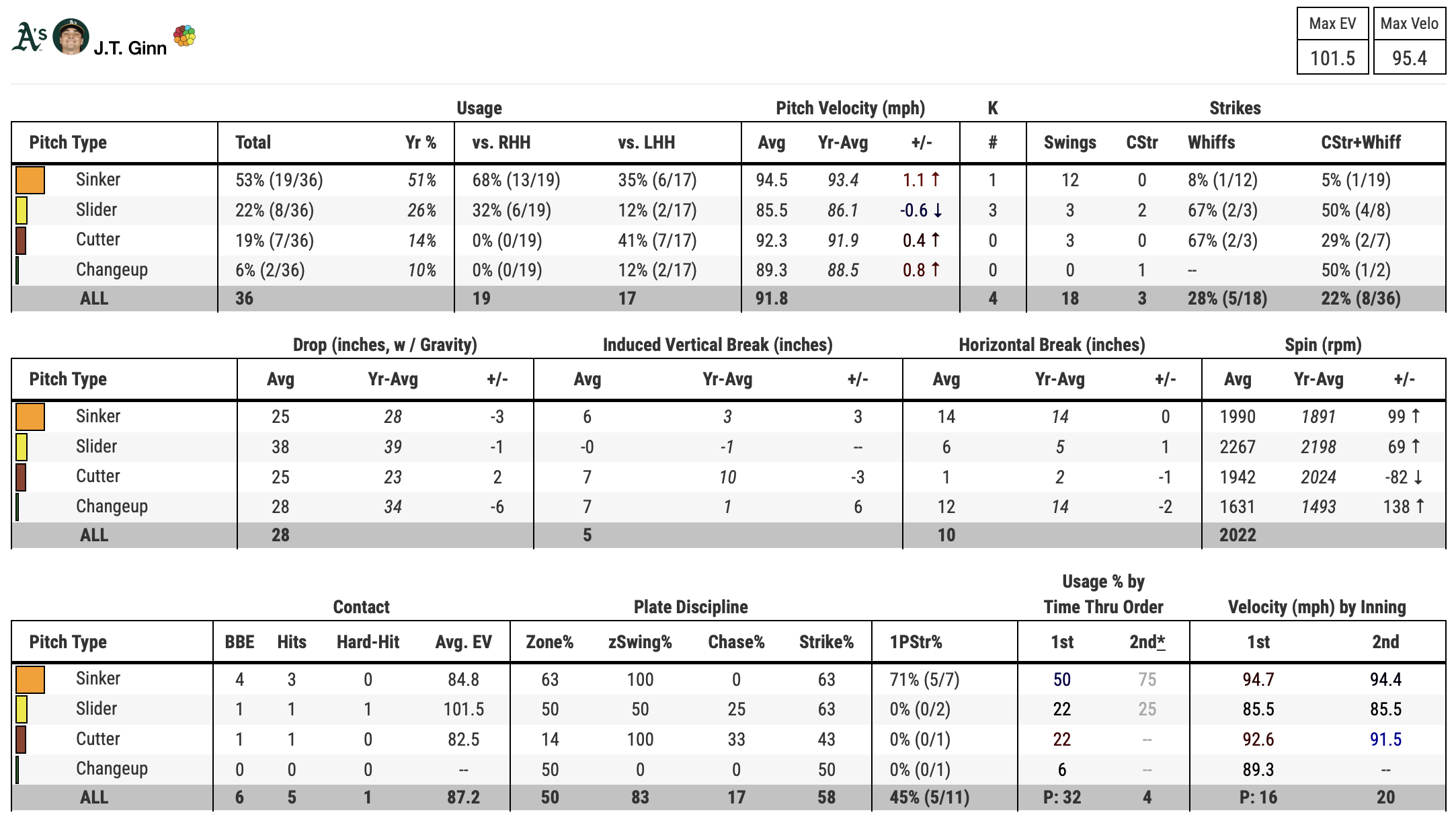
There can, and will be, noise in Spring Training since we’re dealing with smaller samples and players might be working on certain skills and approaches to prepare for the upcoming season. These Spring Training games matter most for those fighting for a roster spot or players seeking an extension or more money. Though it will be exciting to have the Spring Training Statcast data, it’s important not to overreact to the noisy sample of 15 or 20 batted ball events. Overall, the Spring Training Statcast data will provide an additional data point to support or question the player thoughts we had before the 2026 season.
Starting Pitchers in Drafts
Regardless of the draft platform, we often see starting pitchers pushed up in drafts. That’s especially true in deeper formats where we’re chasing projected safety and upside. The first rule of fantasy baseball is knowing the rules, roster and scoring format to formulate your draft plan. If your league values starting pitchers, whether it be points, quality starts, wins or strikeouts, then it makes sense to target them earlier in drafts.
In most Yahoo formats, hitters are prioritized within the first several rounds. For context, 16 starting pitchers were drafted within the first five rounds (top-60 picks) of 12-team leagues. There were two relievers drafted in the top-60 picks, meaning 18 of the 60 players were pitchers. The draft market tells us to lean on hitting early to find potential draft values later at the starting pitcher position.
Since we’re in the age of stuff and whiffs for starting pitchers, the workload for high-end arms has reduced. Over the past five seasons, 2025 was the year with the fewest number of starting pitchers throwing 175 innings or more at 26 since 2021 (27). For context, 32 pitchers in 2024, 31 in 2023, and 35 in 2022 threw 175 innings or more. That should help recalibrate our expectations for high-end inning totals for starting pitchers.
Early Injuries and Prospect Hype
Hamate bone injuries took over the early headlines recently. Francisco Lindor, Corbin Carroll and Jackson Holliday all had surgery for the injury. It sounds like they’ll need around 6-8 weeks to recover, potentially missing Opening Day. That’s a major hit for Lindor and Carroll going within the first two rounds. Meanwhile, Holliday has been a top-150 pick in Yahoo leagues.
On the pitcher side, Cam Schlittler (back), Josh Hader (bicep inflammation) and Spencer Schwellenbach headlined the early injuries. More will come as players ramp up in camp and start playing in Spring Training. Don’t over-invest in injured players, especially in leagues without injured reserve spots. However, there are situations where it’s worth stashing injured players, assuming they have discounted prices.
Many drafters love prospects and small-sample success. Roman Anthony’s Yahoo ADP is around the top-50 picks (49.4), meaning fantasy managers will need to pay up for one of the top prospects in baseball. Most projection systems have Anthony with 18-20 home runs, nearly double-digit stolen bases, a .260 batting average and 160-170 runs plus RBI. Is that worth a top-50 pick? Maybe not, but we can dream of the power tools (75.1 mph bat speed) and above-average athleticism.
That said, take shots on prospects and lean into the uncertainty later in drafts. For instance, prospects and sleepers like Chase DeLauter, JJ Wetherholt, Tatsuya Imai, Jac Caglianone, Parker Messick, Jonah Tong and Konnor Griffin all go around or past pick 200. Other prospects of note include Justin Crawford and Kevin McGonigle.
Stolen Base Trends
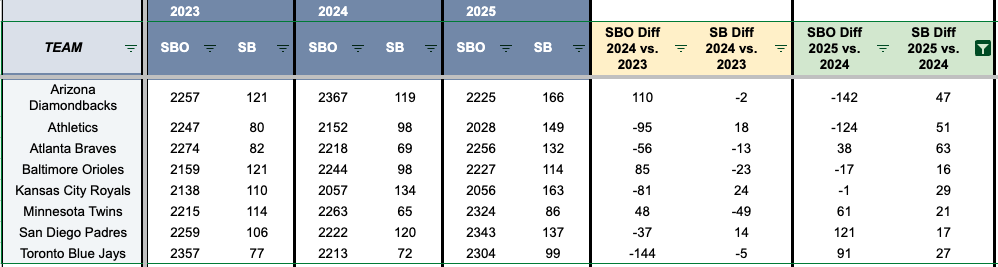
With the new rules around base running in 2023, we’ve seen stolen bases increase. There have been over 3,400 stolen bases over the past three seasons, including 3,440 in 2025, 3,617 in 2024 and 3,503 in 2023. That’s the first time it was over 3,000 since 2012 (3,229). Eight teams saw an increase of 15 stolen bases in 2025 compared to 2024. When we filter by teams that stole over 100 bases in three consecutive seasons, the list of eight falls to three, including the Diamondbacks, Royals and Padres. The Orioles barely missed with over 100 stolen bases in 2023 and 2025, but 98 in 2024.
Meanwhile, 10 teams had their stolen bases totals dip 15 or more in 2025 compared to 2024. Six teams saw a decline of 30 or more stolen bases in 2025, including the Red Sox, Angels, Dodgers, Marlins, Brewers and Nationals. This is where context matters because the Brewers and Nationals had the two highest stolen bases totals in 2024, and saw those numbers take a huge hit in 2025. Meanwhile, the Marlins possibly had an outlier season in 2025, with 2024 being an unusual season for the Angels, regarding stolen baes.
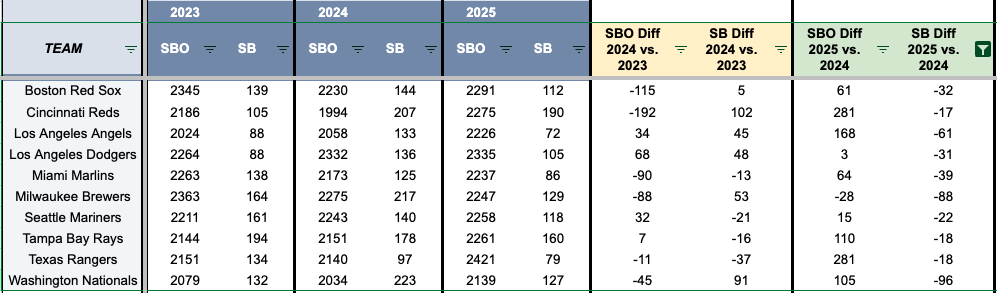
Besides the team context, the players on those teams, their health and the team managers impact the trends. Stolen bases might be more plentiful, but we’ll still need to prioritize them in drafts. That’s especially true since we might need to have more stolen bases to win points in rotisserie leagues. However, if it’s a head-to-head categories or points league that doesn’t value stolen bases highly, then maybe it’s fine to devalue players with stolen base upside.
Speculate on Relievers/Saves in Later Rounds
Depending on the format, relievers can hold more or less value, especially if it involves saves or saves and holds. In higher-stakes formats, closers and saves tend to be pushed up the draft board. In Yahoo leagues, we can speculate on relievers for saves in the later rounds. That’s especially true when there’s some uncertainty and concern to exploit. An example would be who to target among the Brewers: Trevor Megill or Abner Uribe.
After pick 150, we find Emilio Pagán, Kenley Jansen, Daniel Palencia, Dennis Santana, Will Vest and Ryan Walker. All should find themselves as the primary option for saves or in the mix for a share in 2026. That’s especially true in Yahoo leagues, where we can find relievers on the waiver wire or wait to draft them in the later rounds, depending on the scoring and league format. Knowing the market prices might suggest we should lean on a strong closer earlier in the draft, and then wait for a second or third reliever later in drafts, almost like a HeroRB draft approach in fantasy football leagues.